
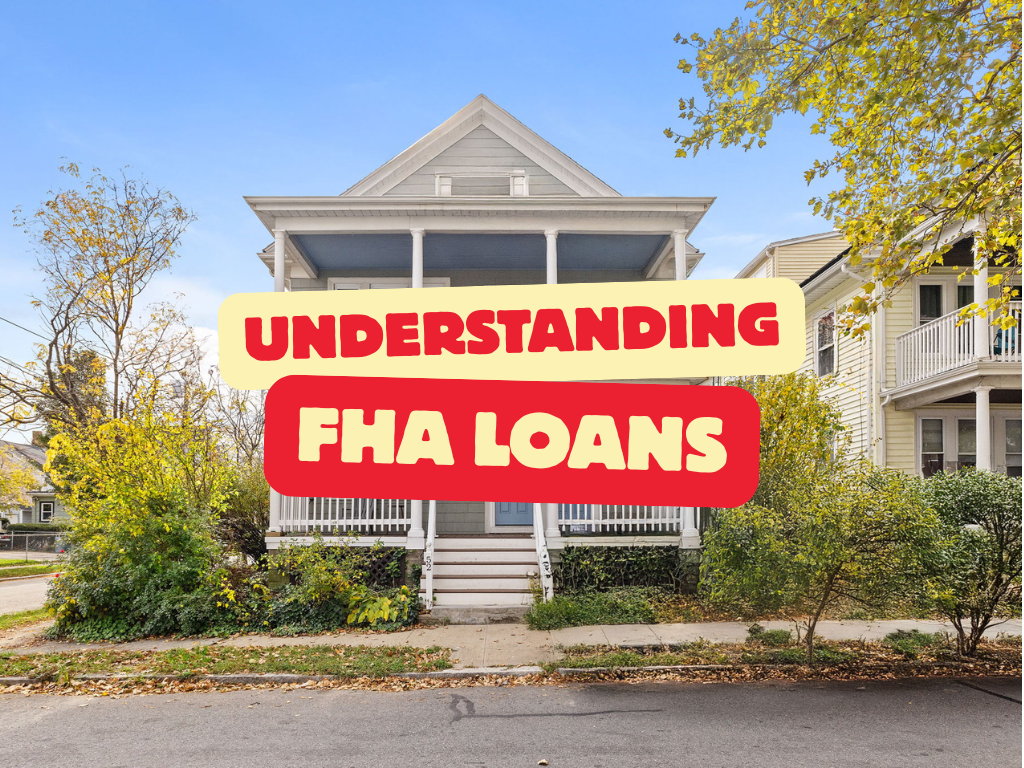
FHA loans are often a lifeline for first-time homebuyers — but they can also cause confusion or concern for sellers, especially in markets full of older homes (like much of Rhode Island and Southern New England). Let’s break down what FHA loans really are, how they differ from conventional financing, and what both sides of the table should understand before moving forward.
What Is an FHA Loan, and Why Buyers Use Them
FHA loans are backed by the Federal Housing Administration and designed to make homeownership more accessible. They allow for:
Lower down payments (as low as 3.5%)
Lower credit score thresholds
Higher debt-to-income ratios than most conventional loans will permit
That combination opens the door for many first-time buyers who might otherwise be priced out of the market.
I can say this firsthand: I used an FHA loan to buy my first two-unit property in Providence. That low 3.5% down payment was the only way I could afford to buy at the time — it allowed me to get into the market, live in one unit, and rent out the other to help offset my mortgage. It was a game changer.
But while FHA loans make homeownership possible for more people, the home itself has to meet minimum health and safety standards for the loan to be approved.
Why Sellers Sometimes Hesitate
If you’ve ever heard a seller say, “I’d rather take a conventional offer,” this is usually why.
FHA loans require the appraiser to function as both an appraiser and a quasi-inspector. They’re evaluating not just the property’s value, but whether it meets HUD’s minimum property standards.
Even if a buyer loves the home “as-is,” the lender may not approve the loan until certain repairs are made — and those repairs usually fall on the seller before closing.
Common FHA “Red Flags” in Older Homes
If you’ve ever owned or toured a home built before 1950 (so, most of Rhode Island), these might sound familiar. FHA (and VA) appraisers often flag the following:
Peeling paint — inside or outside, including garages and porches (especially concerning in pre-1978 homes due to lead paint)
Asbestos-wrapped pipes or other hazardous materials
Active knob-and-tube wiring or other outdated electrical systems
Broken windows or missing panes
Missing handrails on interior or exterior stairs
These aren’t cosmetic nitpicks — they’re health and safety requirements under HUD guidelines.
Real Example:
In one recent transaction, the property had a few common issues that might sound familiar:
Asbestos-wrapped pipes in the basement — intact, but potentially flagged. The solution would be to remove or professionally rewrap them.
A single line of visible knob-and-tube wiring — if inactive, document that for the appraiser; if active, it’ll likely need to be replaced.
Peeling paint on the garage — a quick scrape and repaint typically satisfies the requirement.
Missing handrails — inexpensive to fix, but essential to install before closing.
For a conventional loan, most of these wouldn’t even appear on the lender’s radar unless the appraiser or underwriter specifically flagged them.
What Buyers Should Know
If you’re using FHA financing, don’t be discouraged — just be prepared.
Work with a full-time, experienced agent who can help you spot potential FHA issues before you even write the offer. Your agent can help you:
Understand which homes might present fewer appraisal challenges
Factor in potential repair requests during negotiations
Communicate clearly with the listing agent to build trust and demonstrate you’re a strong, qualified buyer
In a multiple-offer situation, sellers may still lean toward a conventional buyer simply because it’s viewed as less likely to cause delays. But with good communication, a pre-approval letter in hand, and realistic expectations, FHA offers can absolutely still win. I've written offers for Buyers where we write in the offer that we're willing to take on specific repairs if needed---hey, if it's a multiple offer situation and my client wants the house I will literally bring a ladder and a paintbrush (true story--ask me!).
What Sellers Should Know
If you’re reviewing offers and one is FHA, don’t automatically write it off. A well-qualified buyer using FHA financing can still be a fantastic buyer — you just need to know what to expect.
The key is proactive preparation. Before you list, take a critical look at your home through an appraiser’s eyes. Touch up peeling paint, add missing handrails, and address visible safety issues. A little bit of prep can prevent a last-minute scramble later. These are all issues I can typically spot and help you get in front of before your property is listed.
The Bottom Line
FHA loans are a vital part of helping new homeowners enter the market — and they’re especially important in regions like ours with high prices and aging homes. I’m living proof that FHA loans can be the stepping stone to long-term financial stability and homeownership.
But buyers and sellers both need to understand what’s involved, prepare accordingly, and work with experienced professionals who can guide them through the process.
With the right expectations — and a little paint and elbow grease — FHA loans can get you to the closing table just as successfully as any other financing type.
Check out this article next